Shopify Conversion Rate Calculator
Fix the PDP before you spend another dollar on Meta.
are now
average
quartile
decile
98% of shoppers leave with their question unanswered
They want to buy. They just have a question. The PDP's job is to win their trust and answer it — visually, fast, before they second-guess.
Based on Shopify platform-average conversion rate of 1.8%.
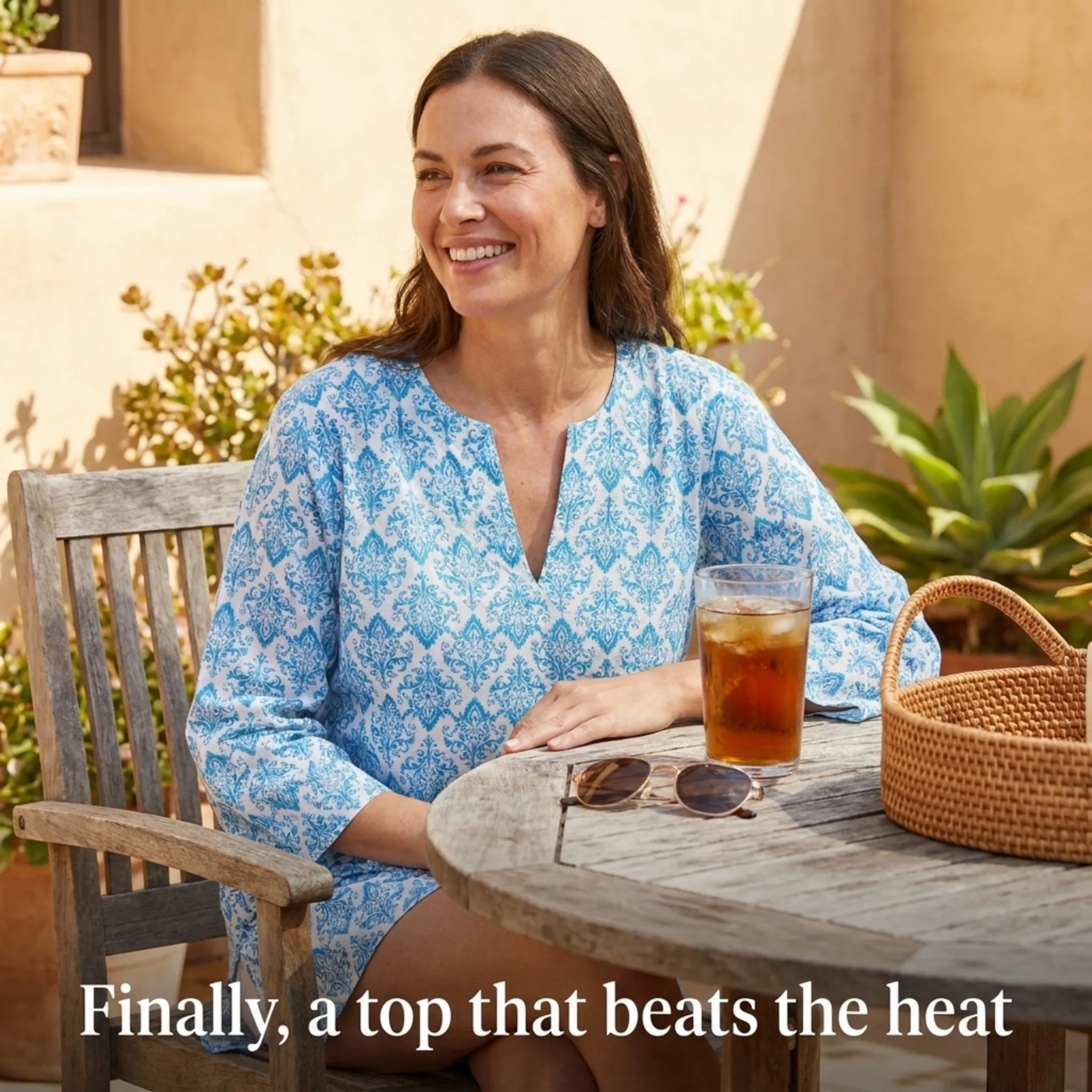
"Will this actually fit me?"
Show it on multiple body types. Length on a 5'4" model vs a 5'10" model. Fabric drape in a real lifestyle moment. Detail at shoulder, waist, and hem.
"How big is this really?"
On-hand for scale. Coin or quarter reference. Worn from multiple angles. Macro close-up to show finish quality and weight.
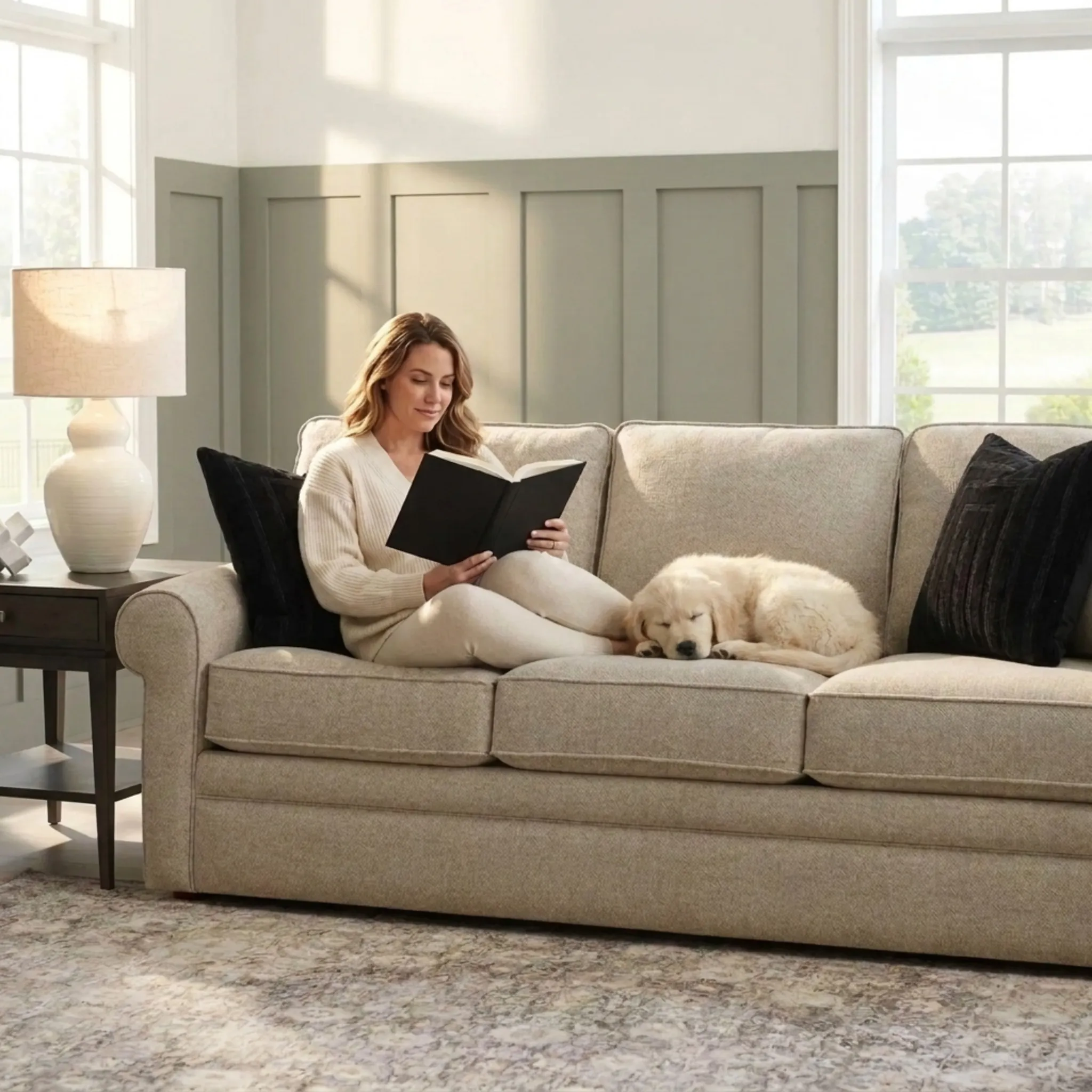
"Will this fit my living room?"
Styled in a real room with a person for scale. Multiple room aesthetics. Top-down dimension diagram. Texture and material close-up.
"Will this work on my skin?"
Swatches across multiple skin tones. Bottle in-hand for size. Texture macro — runny or thick? Ingredient hero with key actives called out.

"Will this taste good?"
Real plating in context. Cross-section or close-up showing texture. The actual product, not the box. Hand or use-shot for scale.
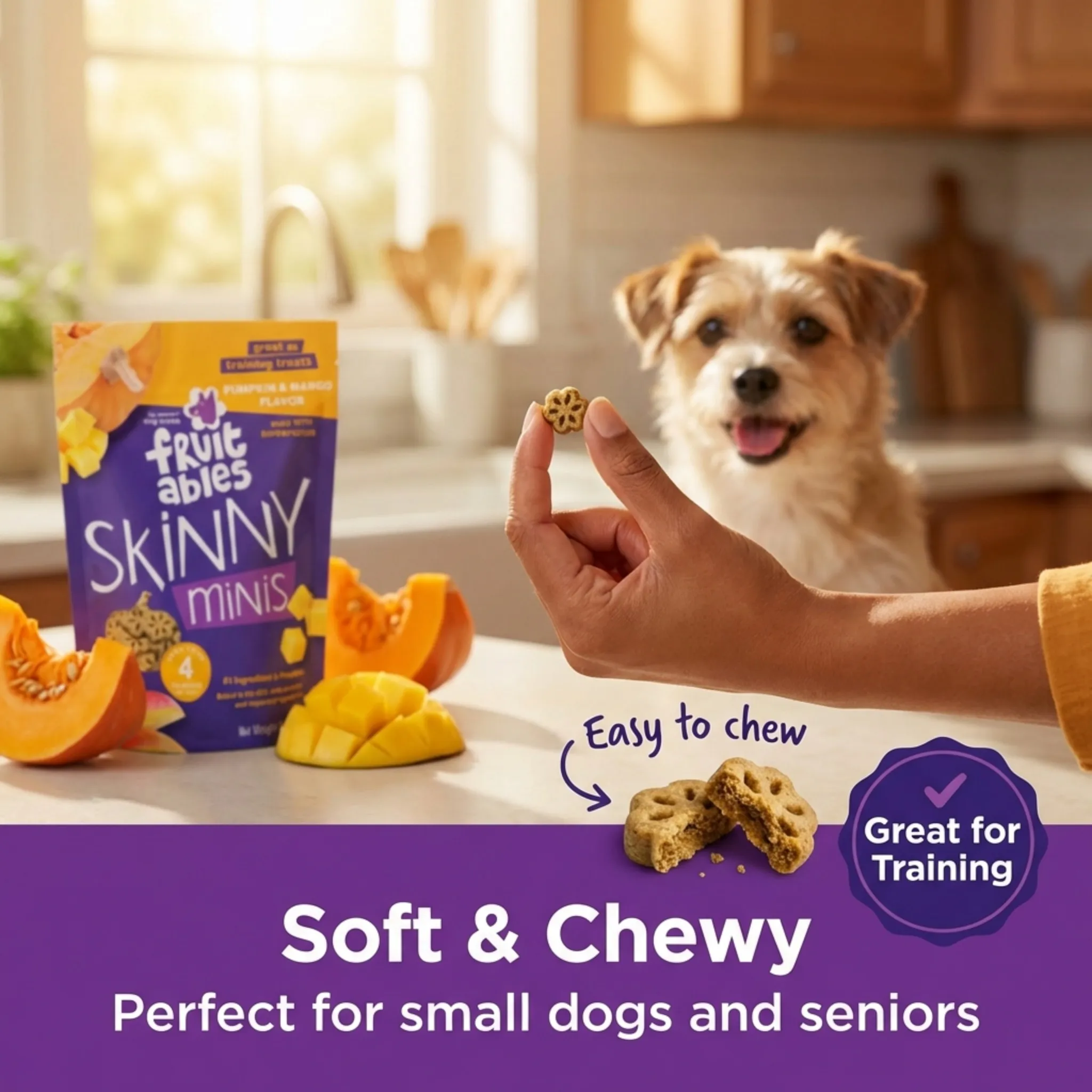
"Will this fit my hand or desk?"
In-hand and on-desk. With cables and accessories laid out. Size comparison next to a phone or laptop. What's actually in the box.
More category visuals coming soon.
5 things that move the PDP needle
The math says fix the PDP. Here's what fixing it actually looks like.
1. Hero image
The first image is 80% of the click decision. Wrong hero = lost sale before they read a word.
2. Gallery order
Most stores stack hero shots. The top quartile alternates: product, lifestyle, infographic, comparison, social proof.
3. Lifestyle proof
In-context images outperform pack shots by 30-50% in DTC. The shopper needs to see themselves using it.
4. Social proof
Reviews, "as seen in," ingredient/material credibility, before/after. Trust signals lift CVR more than any layout tweak.
5. Mobile
70%+ of Shopify traffic is mobile. If your gallery isn't legible at thumb-distance, the desktop view doesn't matter.
Most brands know what to fix. They just can't generate it fast enough to test.
Tired of fixing PDPs by hand?
Generate a full PDP in Pixii
Built for Shopify operators and DTC brands, not hobbyists
The Manual Way
- Brief a designer, wait 2 weeks
- One PDP at a time
- Wrestle ChatGPT prompts
- Off-brand, inconsistent outputs
- Can't test multiple variants
The Pixii Way
- Paste product URL or photo, get full PDP visuals in 2 minutes
- Spot Edit any element in one click
- Convert to editable layers
- Brand Profile keeps every output on-brand
- Trained on top 1% of DTC sellers
Drop in a photo, Pixii handles the rest
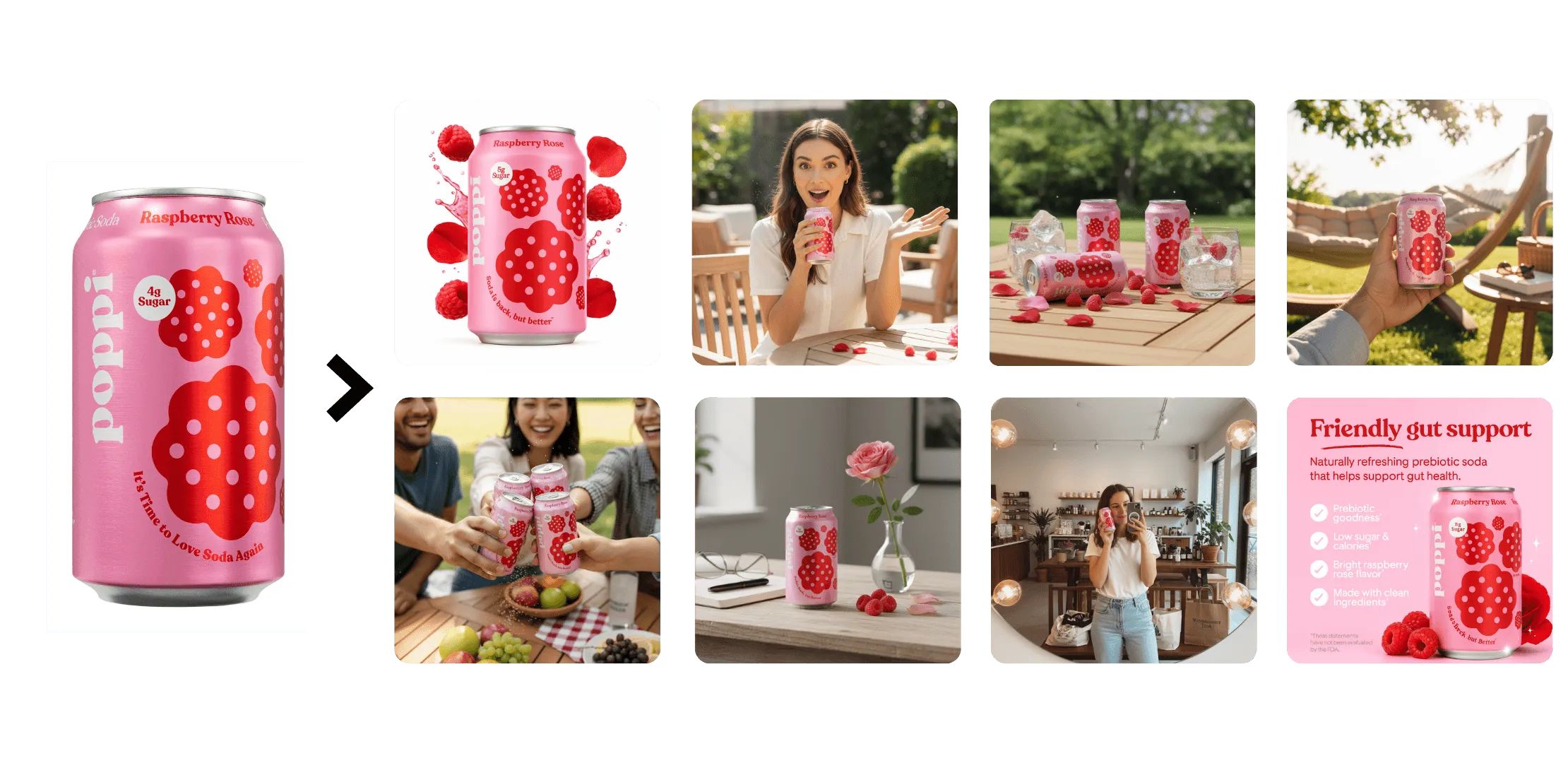
Every output is fully editable
Pixii outputs aren't flat images. Convert any design to editable layers. Change text, swap product photos, adjust copy, push straight to your Shopify storefront.

Scale 1 PDP design to 1000
Create one master PDP design and apply it across your entire catalog. Pixii adapts each product automatically.
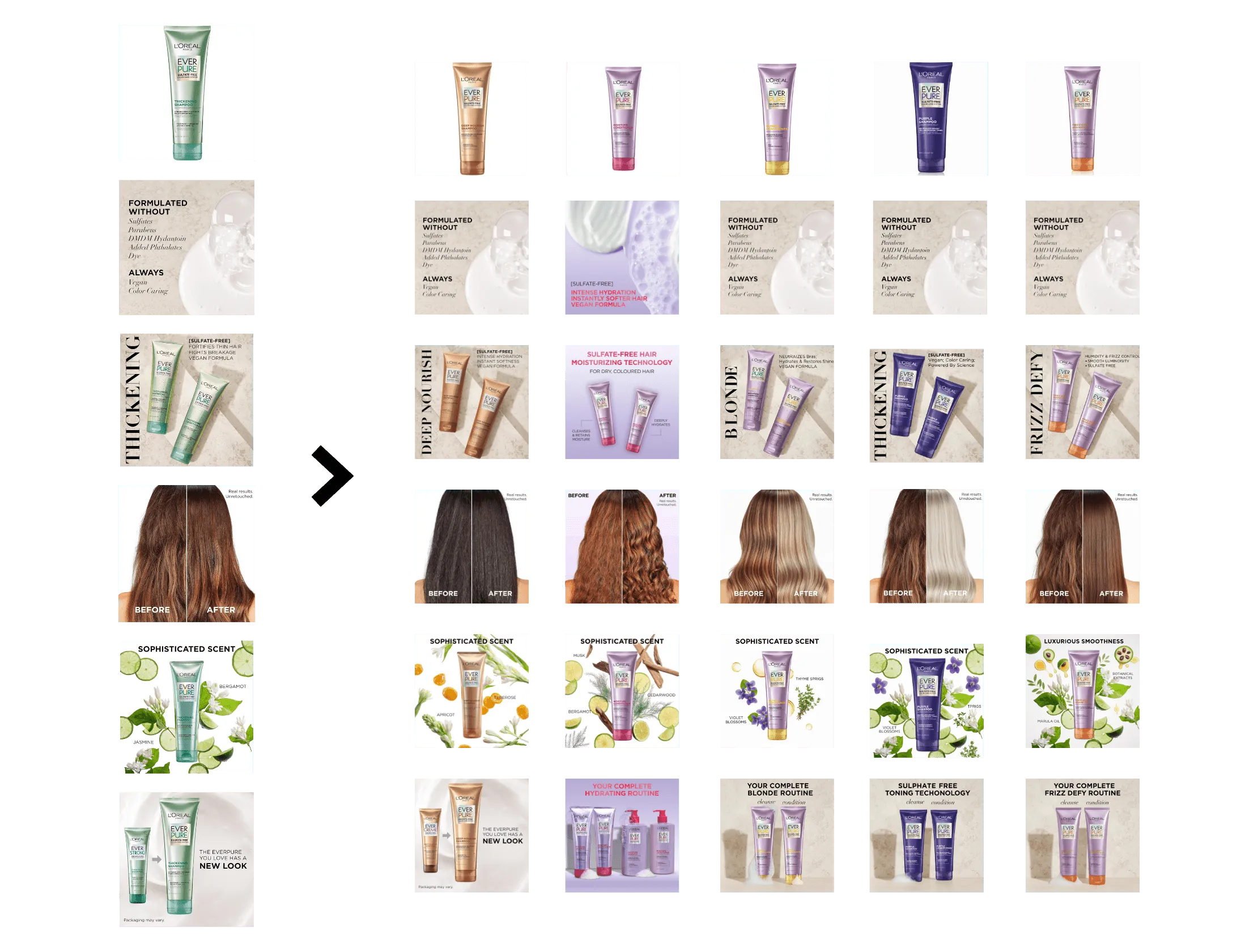
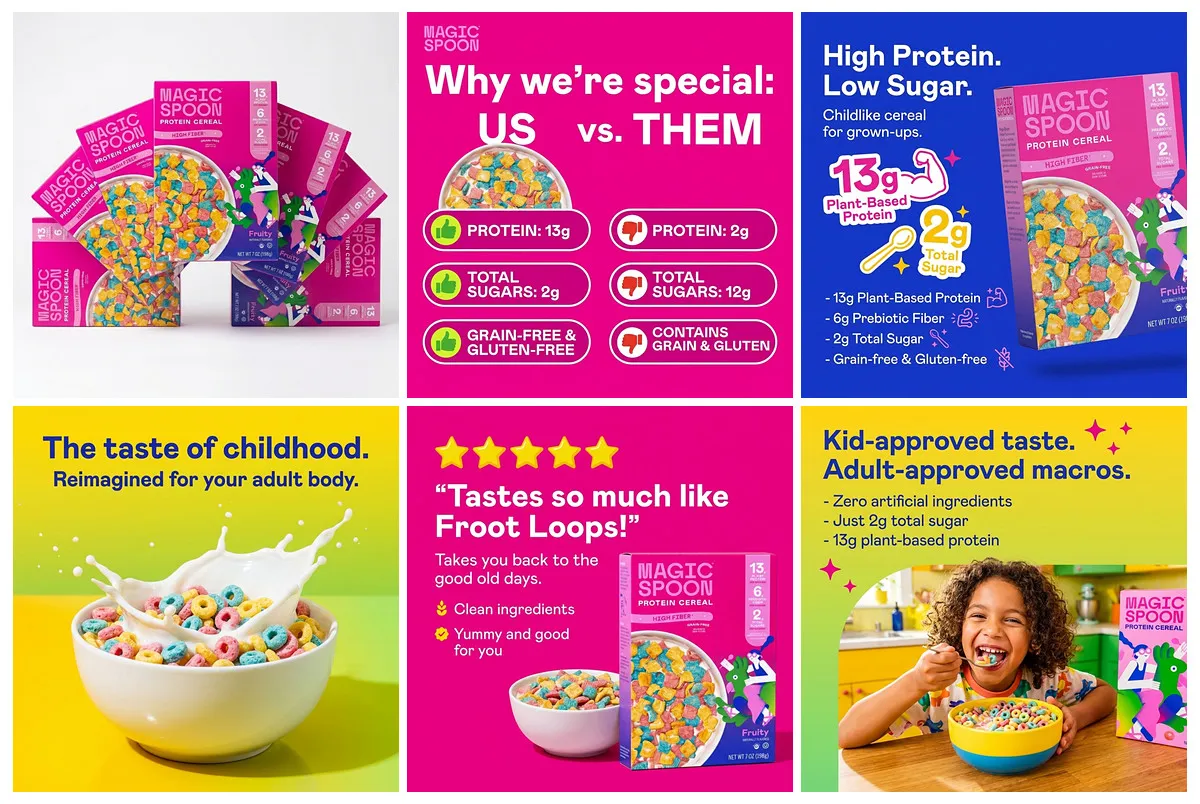
Made in Pixii. Zero prompts.
Three brands you know. None of these were prompted.
Examples below are Amazon listings — same product, same Pixii outputs, just sized for Amazon. Shopify PDP gallery coming soon.

Frequently asked
What's a good Shopify conversion rate?
The Shopify platform average sits around 1.8%. Top quartile DTC stores convert at 3.3%, top decile at 5%+. If you're under 1.5% with decent traffic, your product page is the bottleneck — not your ads.
Should I run Meta ads first or fix my PDP?
Fix the PDP first. Ads send traffic; the PDP converts it. A 1% CVR going to 2% doubles your revenue from the same spend — that compounds across every channel forever. Buying more traffic to a broken PDP just multiplies the leak.
What photos do I need on my Shopify product page?
It varies by category — and within category, by product. The basics every PDP needs: a hero, lifestyle shots, scale or fit references, social proof, and a mobile-optimized layout. Beyond that, the priority shifts: apparel needs fit and fabric detail; jewelry needs scale and finish; furniture needs scale and texture; beauty needs swatches across skin tones. Pixii has this intelligence baked in — drop in a product URL and it generates the right image set for your category and SKU.
How many images should be on a Shopify PDP?
7–10 is the practical range. Hero, 2–3 lifestyle, 1–2 detail or scale, 1 social proof or comparison, 1 packaging or what's-in-the-box (where relevant). Fewer than 5 leaves questions on the table; more than 12 stops getting opened on mobile.
How long does it take to fix a PDP?
Manually, a single redesign is a 2-week project across a designer, copywriter, and product manager. With Pixii you generate a full set of PDP visuals — hero, gallery, lifestyle, social proof — in 2 minutes from a product photo or URL.
Does Pixii work for Shopify?
Yes. Pixii outputs PDP visuals you can drop straight into a Shopify product page, brand site, or any e-commerce storefront. Same product, same outputs — just sized for your storefront.
Does Pixii know what to generate for my category?
Yes. Pixii is trained on the top 1% of DTC sellers across categories. It knows what apparel PDPs need (fit, fabric, body diversity), what jewelry PDPs need (scale, finish, on-body), what furniture PDPs need (room context, scale, texture), and so on. You don't write prompts — Pixii picks the right image set.
What's the difference between a PDP and a product page?
Same thing. PDP (Product Detail Page) is the e-commerce term — the page a shopper lands on when they click a product. On Shopify it's /products/{handle}. The PDP is where conversion is won or lost.
Stop scaling spend on a broken PDP
Drop a product URL or photo. Get a full PDP in 2 minutes. No prompts. No designer.
Design your PDP in 2 minutes →