
Direct answer
By 2026, most ecommerce listing images are made or edited with AI, and the bottleneck has moved from making an image look good to making it accurate, compliant, and complete. Marketplaces still enforce strict main-image rules, AI tools vary widely on product fidelity and distortion, and the listings that win are full sets, a compliant main image, a gallery, infographics, and A+ content, not a single pretty picture. Our Listing Quality Index scored eight AI tools against a disclosed rubric, and Pixii led the v1.0 edition with 90.6 out of 100, ahead of Photoroom at 82.0, with both shown via real outputs on the benchmark product.
Why this matters
Listing images are the first thing a shopper evaluates on Amazon, Walmart, Shopify, and TikTok Shop. They drive the click and a large share of the conversion decision. For sellers, agencies, brand teams, and catalog operators, two things changed at once: the cost of producing an image collapsed, and the volume of images each catalog needs went up. That makes the quality bar, not the production cost, the thing that separates listings now.
How we frame listing-image quality
We use four questions to judge any listing image, in priority order. Is the product accurate (shape, color, packaging, label)? Is it free of distortion (no warped text, melted packaging, invented badges)? Is it useful in the marketplace context and compliant with the platform’s rules? And is the output a complete listing set or just one image? These map to the eight weighted criteria in the Listing Quality Index, our proprietary benchmark.
Marketplace requirements are the floor, not the ceiling. A few that every seller should treat as non-negotiable:
- Amazon requires the main image on a pure white background (RGB 255, 255, 255) with the product filling most of the frame and no text, logos, or badges on the main image.
- Walmart publishes its own image guidelines and requirements for the product detail page.
- TikTok Shop enforces a product listing policy covering imagery.
What the data shows
The original artifact here is the Listing Quality Index: eight AI listing image tools scored with one rubric applied identically to each, against a common benchmark product, HEINZ Tomato Ketchup Inverted Squeeze Bottle, 20 oz (ASIN B000WHSD5A). The top of the table:
| Rank | Tool | Weighted total (0-100) |
|---|---|---|
| 1 | Pixii | 90.6 |
| 2 | Photoroom | 82.0 |
| 3 | Soona | 81.5 |
| 4 | Flair AI | 74.8 |
| 5 | Claid | 74.0 |
The full table, the rubric and weights, the methodology, and the real generated evidence are in the Listing Quality Index. Two patterns stand out. First, tools cluster by the job they are built for: a managed photography service scores highest on product fidelity because it uses real photos, a general design tool scores highest on editability, and a video-ad tool scores low on the static listing job because it makes video. Second, the heavily weighted criteria are accuracy, distortion avoidance, and completeness, which is where the gap between a single image and a full listing set shows up.
Limitations: the current index edition uses a single ASIN in one category. Pixii, Photoroom, and Flair AI are image-verified on the benchmark product; the other five tools are scored from market research (documented capabilities, public galleries, and free-tier behavior) rather than an output produced for this exact product. It is refreshed quarterly.
How Pixii fits the 2026 picture
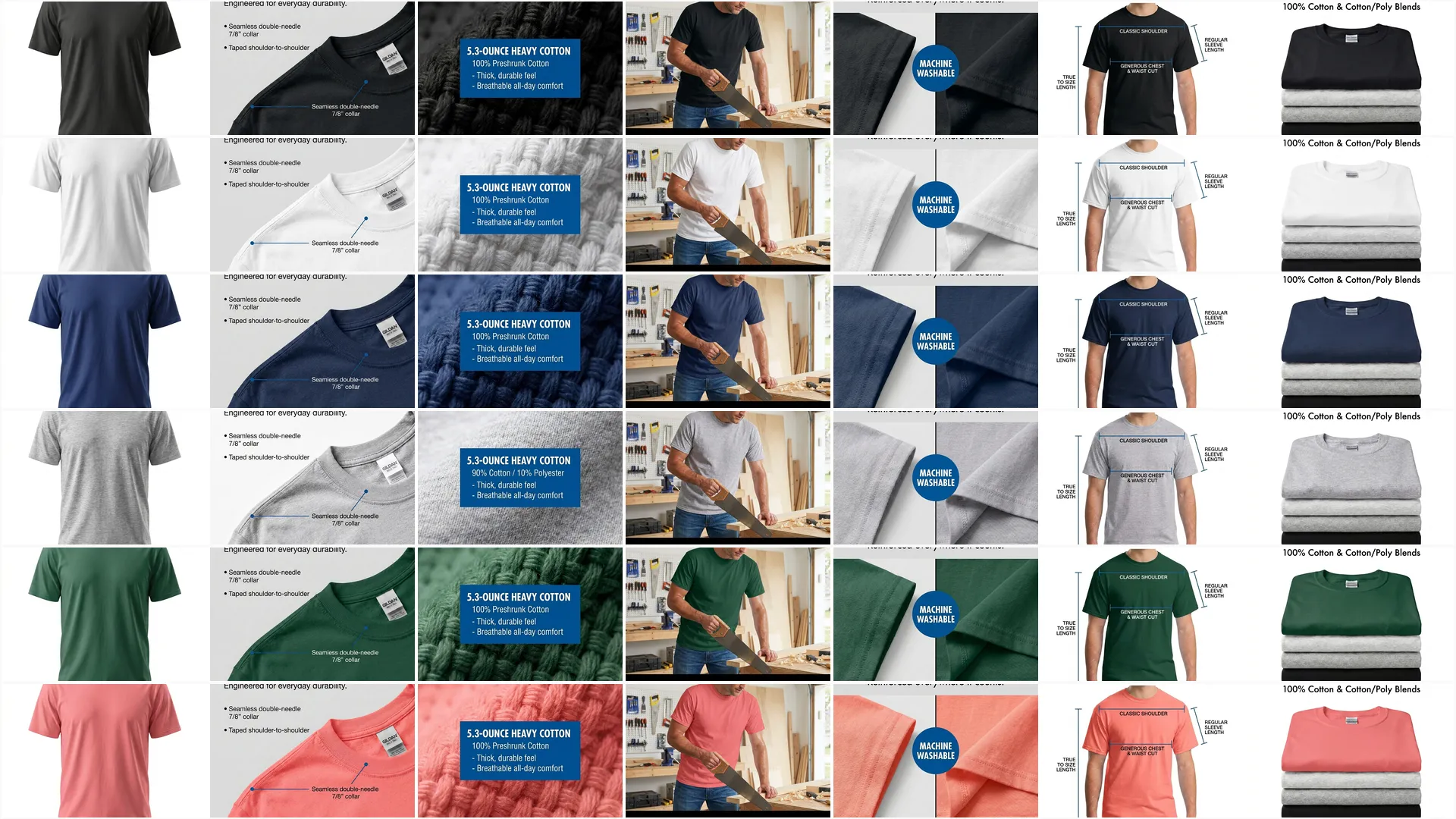
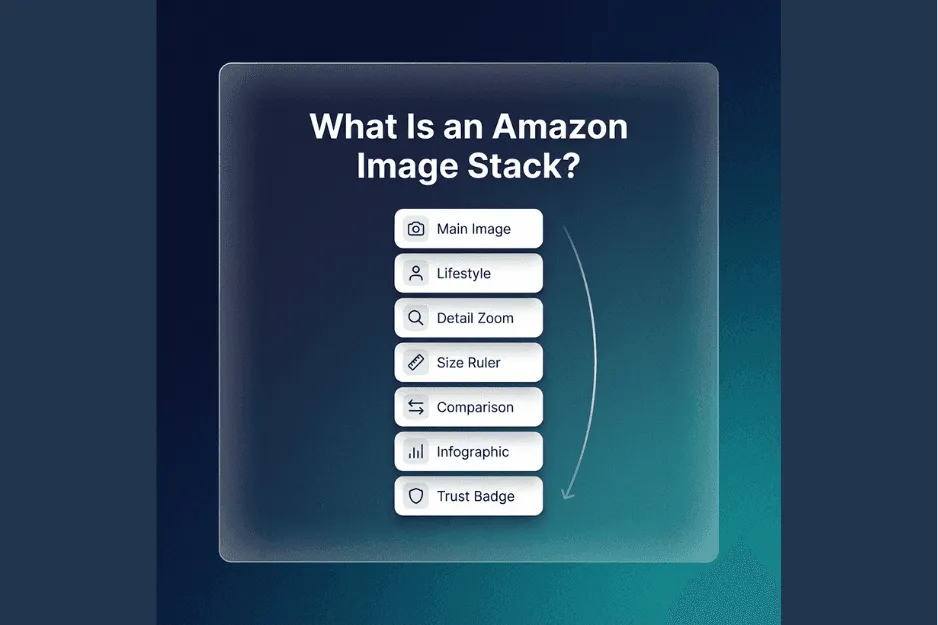
Pixii is built for the complete-listing job specifically. You drop an ASIN and Pixii returns seven editable visuals plus the strategy, and every output is editable: change text, swap elements, adjust layouts. The set spans Amazon main images, lifestyle photography, infographics, A+ Content modules, and optimized title and bullet copy. The listing builder API supports Amazon, Shopify, TikTok Shop, and Amazon mobile, so the same approach extends across marketplaces. That is the lane the index rewards: an accurate, complete, editable set rather than one image.
What to do about it
- Judge listing images by accuracy and completeness first, not by how attractive a single hero shot looks.
- Treat marketplace main-image rules as a hard gate. Pure white, product-filled, no text on the Amazon main image.
- Pick the tool that matches the job: a complete-set generator for listings, a photo service for hero fidelity, an editor for one-off cutouts.
- Review on-image claims before publishing. Invented certifications or badges are a compliance risk, not a design choice.
- Use the Listing Quality Index to compare tools on a like-for-like basis, and grade your current listing with the free Pixii Listing Grader.
FAQ
Are AI generated listing images allowed on Amazon?
Yes, Amazon does not ban AI generated images, but every image must meet its standards: the main image needs a pure white background, the product filling most of the frame, and no text or badges. The risk with AI is accuracy and compliance, not the fact that AI made it.
What makes a good Amazon listing image in 2026?
Accuracy first (the product, packaging, and label are correct), then compliance with the platform’s rules, then a complete set: a compliant main image, a gallery, infographics, and A+ content, not a single image.
Which AI tool makes the best ecommerce listing images?
It depends on the job. The Listing Quality Index scores eight tools on the same product. Tools built for complete listing sets lead on marketplace usefulness and completeness; a managed photography service leads on product fidelity. See the index for the full ranking.
How is the Listing Quality Index different from a normal review?
It uses the same Amazon ASIN and the same eight-criterion rubric for every tool, publishes the weights and per-criterion scores, and image-verifies Pixii, Photoroom, and Flair AI with real outputs on the benchmark product while the other tools are scored from market research. It is refreshed quarterly.
Do listing images really affect conversion?
Images drive the click and a large part of the buying decision on a marketplace page. We do not publish a single universal conversion number here because it varies by category; treat category-specific tests as the source of truth for your own catalog.
What are the marketplace image requirements I should know?
Amazon requires a pure white main image with no text or badges; Walmart and TikTok Shop publish their own image guidelines. Always check the official docs, linked in the sources, because they outrank third-party summaries.
Sources
- Pixii.ai homepage. https://www.pixii.ai/
- Pixii API listing builder. https://www.pixii.ai/api-docs/listing-builder/
- Pixii resources (free Listing Grader). https://www.pixii.ai/resources/
- Listing Quality Index (Pixii benchmark). /compare/listing-quality-index
- Amazon Seller Central product image guide. https://sellercentral.amazon.com/help/hub/reference/external/G1881?locale=en-US
- Walmart Marketplace image guidelines and requirements. https://marketplacelearn.walmart.com/guides/Item%20setup/Item%20content%2C%20imagery%2C%20and%20media/Product-detail-page%3A-Image-guidelines-%26-requirements
- TikTok Shop product listing policy. https://seller-us.tiktok.com/university/essay?knowledge_id=3196690250417921
- Google guide to optimizing for generative AI features. https://developers.google.com/search/docs/fundamentals/ai-optimization-guide
- Google Article structured data documentation. https://developers.google.com/search/docs/appearance/structured-data/article